
Thursday, October 14, 2010


Tuesday, August 24, 2010
Come to the next SFDebate at the Commonwealth Club in San Francisco and debate the future of news!
As one of the assistant organizers of the SFDebate Political Discussion Meetup, I got to choose, write the motion for and organize this event. If you like getting logical, contentious or just plain curious about news organizations and their futures, come join us for this event!
~^~^~^~^~^~^~^~^~^~^~^~^~^~^~^~^~^~^~^~^~^~^~^~^~^~^~
Motion: This House Supports Instituting a Tax-Exempt Option for U.S. News Organizations
Where: The Commonwealth Club
Location: 595 Market Street, 2nd Floor, San Francisco, CA 94105
Cost: $5 for non-members, free for members.
RSVP online: http://www.meetup.com/sfdebate/calendar/14532035/
Is technology turning journalists into crackheads?
Speed, speed, speed!
Does anyone speaking online about the future of news delivery mention anything other than speed?
How about quality, quality, quality?
Or better yet, speed, quality, customization and relevancy?
What other industry doesn't have a balanced approach in its delivery of a product? In our quest to jump on the technological bandwagon of News 2.0, or whatever you want to call it, the news community has become nothing more than a zoo full of squawking parrots for the start-up and technology worlds, hoping to harness some of the speed, brain trust (and, ahem, funding) that tech companies like Google and Bing are enjoying at present.

Even my dad's pet squirrel Pewer gets tired just thinking about how fast news comes at him these days.
Can we get back to the strengths that got us here, folks? Writing that embodies a sense of history while grasping the future, reputation for factualness and grammatical accuracy, insatiably curious natures and noses for newsworthiness, peer-review and consiseness (not just leaving word count to flap in the wind, since the internet is infathomably big)?
Anyone will tell you that in terms of the nature of a traditional hack, I am by no means the definition of one, embracing changes in technology before I know how to use them. But I'm losing my patience with our industry. Let's get back on track with our objectives, shall we?
Friday, August 13, 2010
Hacks and Hackers: a match made in Information-Age heaven
Networking does pay off: Through our SFDebate at the Commonwealth Club, I was introduced to a friend who was also part of another Meetup group, Hacks and Hackers.
I couldn't believe what I read on the description: "The worlds of hackers and journalists are coming together as reporting goes digital and Internet companies become media empires." Dear god! Someone's heard the answer to my frustrated cries of asynchronization!
I joined in January this year and every event has been a leap forward in the way I think about the content-technology creation and delivery process, not to mention the beautiful interplay that can happen when you take all the best people of two disciplines and throw them together under one little start-up roof. Team A puts together really fast little vehicles that look and function sweetly, and Team B fills the vehicle with the kind of quality conversation that changes lives and turns daunting journeys into nostalgic road trips.
Or at least, that's what could happen if we move from mere meetings to partnerships :)
So far, I've attended three Meetups, all at three really stellar little SOMA loft spaces: Freshout, a space "pioneering disruptive ideas on the web," Parisoma and Kicklabs. Names?
- Facebook and the news: Making journalism social
- Can the semantic Web make journalism smarter?
- Hacks and Hackers: The future of personalized news
Thanks Burt Herman, organizer of Hacks and Hackers. You've made the bridge I've been looking to cross for awhile now.
Thursday, August 12, 2010
Finally, a post from the basic e-mail channel ...
 Woman and Pug: Photo taken on the Russian River, Monte Rio, California.
... And we're back!
Sorry folks. Momentarily logged off for a year. Here we go. Back up on the horse!
Tuesday, August 25, 2009
MBAs in Media Management ...
http://www.youtube.com/watch?v=7kE8ydFtzD4 Vienna, huh? Hmmm ....
http://www.mediamanagementcenter.org/
Chicago … Meh.
http://www.bnet.fordham.edu/fordham-business-academics/mba-concentrations/communications--media-management/index.htm
New York ... Yessssss.
http://www.scps.nyu.edu/areas-of-study/film-video-broadcasting/professional-certificates/entertainment-media-management.html
More New York ...
http://www.anderson.ucla.edu/x1030.xml
L.A., pretty great ...
http://mcmagrad.siu.edu/inner.php?pageID=100
Southern Illnois. See Chicago.
http://newhouse.syr.edu/prospective/grad/mediaManagement/program.cfm
Syracuse, eiiiyyyyyy :0/
Monday, July 20, 2009
Vision interrupted ...
Maybe this is what everyone goes through: Your company lures you in with the promise of training, and the budget and time required to complete it, only to cap you to the point of getting such inadequate, minimal training as to not make almost any difference whatsoever to your skill base.
*sigh* *harrumph* *sigh*
What that actually translates into for me at my job is sneaking around, "training on the sly" when lag times arrive in my 8-5. (Or 8-6, or 8-7 ...) I'm actually trying to get in additional hours of skill, because we're capped at 16 hours of training for any sort of professional conference or training per year.
Huh?
So without holidays, if we worked 40 hours a week, 52 weeks a year, that's 2080 hours of which 16 are reserved for betterment. Are you kidding me? That works out to be an hour of training every three weeks. If it were my organization, I'd be a little more proactive about pushing my employees through the education turnstile.
Witness the U.S. Department of Labor's first objective in their "Strategic Plan for Fiscal Years 2006 - 2011": Goal 1, "Develop a prepared workforce by providing effective training and support services to new and incumbent workers and supplying high-quality information on the economy and labor market."
Word up, Elaine L. Chao, secretary of labor.
Anyhow, I was saving my company mucho dollars by getting myself enrolled in three weeks worth of free art classes, in order to follow through on my previous post about wanting to appreciate and create layout and design more. Well, sorry vision. You can show up, just not on company time ...
Wednesday, June 17, 2009
Designing the swoon, chillaxin' with inventors
In the process of researching professional conferences to attend, two types have caught my eye: those that instruct attendees on how to fill the need for better information design, and those that declare the need for more thorough infusions between media and technology.
First, most people know about information design, thanks to Edward Tufte; we just usually call them "charts and graphs." Or a visual representation of the data you could've read in body copy, if you're a reader first. An effective chart has the power to embed itself deeper into our subconsious and memory, and believe it or not, can actually create appreciable value, according to one paper on Information Design. *As a slight aside, zero visuals or graphs/charts on the organization's website? Hmmm .... do as I say, ....
While Tufte's San Francisco conference in December looks interesting, I'm going to have to keep searching for something a little more germaine to my visual preferences (and skill set!).
AIGA has a terrific newsletter called Transitions that helps people make the switch from novice to student to professional designer. I think most editors who are serious about creating value in their publications and professions should park it here for a spell and learn how to appreciate--and ideally create--the work designers do that makes us all swoon.
Secondly, fewer people know about--or understand--the future of how intertwined information/content/media will be with its technological tools/applications/systems bearers. I discovered that there is an actual acronym for Information and Communications Technology (ICT) and these guys plan new communications business models around communications networks and devices. And unless you're Albert Bell and William Randolph Hearst, chances are you will rely on the next inventor and his/her invention to deliver your message.

The Economist, interestingly, is hosting a similar conference in October this year, but this time, they're gathering the techies, the editors and the marketers to find out how to make sure companies are at that intersection, just waiting to nab the next surge of consumer traffic. Marketers are positioning themselves to meet the commerce where it will be. Pretty smart, huh?
So why don't writers, editors and publishers get strategic about where to meet their audiences? Could it be we've spent too long ruminating over the importance of our own messages that we've failed to see the inventors and their tools just waiting to help us get to the intersection? And guess who's at the intersection? Our audiences, who by the way, happen to be our customers, buyers of media. Buyers of content. Maybe if we spent a little more time with the inventor crowd, we'd be positioned to capture the next wave of paid-content consumers ...
First, most people know about information design, thanks to Edward Tufte; we just usually call them "charts and graphs." Or a visual representation of the data you could've read in body copy, if you're a reader first. An effective chart has the power to embed itself deeper into our subconsious and memory, and believe it or not, can actually create appreciable value, according to one paper on Information Design. *As a slight aside, zero visuals or graphs/charts on the organization's website? Hmmm .... do as I say, ....
While Tufte's San Francisco conference in December looks interesting, I'm going to have to keep searching for something a little more germaine to my visual preferences (and skill set!).
AIGA has a terrific newsletter called Transitions that helps people make the switch from novice to student to professional designer. I think most editors who are serious about creating value in their publications and professions should park it here for a spell and learn how to appreciate--and ideally create--the work designers do that makes us all swoon.
Secondly, fewer people know about--or understand--the future of how intertwined information/content/media will be with its technological tools/applications/systems bearers. I discovered that there is an actual acronym for Information and Communications Technology (ICT) and these guys plan new communications business models around communications networks and devices. And unless you're Albert Bell and William Randolph Hearst, chances are you will rely on the next inventor and his/her invention to deliver your message.
The Economist, interestingly, is hosting a similar conference in October this year, but this time, they're gathering the techies, the editors and the marketers to find out how to make sure companies are at that intersection, just waiting to nab the next surge of consumer traffic. Marketers are positioning themselves to meet the commerce where it will be. Pretty smart, huh?
So why don't writers, editors and publishers get strategic about where to meet their audiences? Could it be we've spent too long ruminating over the importance of our own messages that we've failed to see the inventors and their tools just waiting to help us get to the intersection? And guess who's at the intersection? Our audiences, who by the way, happen to be our customers, buyers of media. Buyers of content. Maybe if we spent a little more time with the inventor crowd, we'd be positioned to capture the next wave of paid-content consumers ...
Experience, report, but filter ...
Sometimes the best thing to say online is not the first.
ABA Journal reminds us as content creators that sometimes the editorial process includes not just fact-checking, but gut-checking, before posting our news, information or editorials.
It also reminds me that while I experience the world and get ready to report my findings, it's good to leave the catharsis to things like the yoga studio, instead of L'Éléfont, n'est-ce pas?
Tuesday, March 24, 2009
ISTJ, take two?
Unbelievable.
Once again, an ISTJ rating for me. Although actually, it's an ISTJ rating for this blog. I tested its language at Typealyzer, a tool developed to analyze the personality type conveyed in your blog. I can't say I'm stoked about this rating, but what can I say? It's been a hard week. This is what happens to me (see earlier "93 Percent More Agreeable Than Me" post) in trying times.
Once again, an ISTJ rating for me. Although actually, it's an ISTJ rating for this blog. I tested its language at Typealyzer, a tool developed to analyze the personality type conveyed in your blog. I can't say I'm stoked about this rating, but what can I say? It's been a hard week. This is what happens to me (see earlier "93 Percent More Agreeable Than Me" post) in trying times.
 Additionally, now Typealyzer has ArcheTypealyzer, a tool that shows you what personality archetype your blog conveys. Mine said:
Motivation: Belonging
Desire to be yourself and find out about the world.
OK, now that? I can live with.
Thursday, March 5, 2009
Museums of the future: counterpoint
And yet, even as I post the "update" vision below, it strikes me that static text is somewhat staid, grand and soothing. There certainly is a place for the fixed word in our ever-changing dialogue, but it impresses upon me the greater weight that those fixed words must now hold if they want to anchor our histories of great people, places and things with real conviction.
I think I was hoping for better quality and depth of writing on the placards at the de Young. Guess I could've just stated that upfront, but leave it to me to see an opportunity to use a different media model.
I think I was hoping for better quality and depth of writing on the placards at the de Young. Guess I could've just stated that upfront, but leave it to me to see an opportunity to use a different media model.
Museums of the future: updating the art-content interplay
Recently, I went to the de Young Museum in San Francisco to see the Yves Saint Laurent and Andy Warhol exhibits. I don't think it struck me until days afterward that the two shows were devoted to artists who mainly plied their best crafts through the 1950s through 1970s. It's interesting to think of the 20th century as "modern" in terms of an art museum, when the 21st century has already brought us more information and imagery than we know what to do with.

The actual costumes and posters were soothing to see in real life; their tangibility reinforcing the wall placard's descriptions alongside. But something about the placards themselves drove me nuts: static text? I don't know. I guess had we never been introduced to the Information Age, static text would suit me just fine.
I guess my point was that I couldn't believe how dated the content (or placards) seemed, in light of our culture of information instantaneousness. One cool thing to see if they would do it, would be touchscreen placards that you could flip though to see different critics' takes on the same piece of art or artist.
Part of me started to think about current artists and authors who reign supreme in real time. I'm not sure how this would work, but I began to think about how they could display actual art that is being created as we speak, perhaps on Screen #1, then have actual critics writing the biographies and summaries of the artists and their work, perhaps on Screen #2. It would almost be a wing of the museum where you'd never see the same thing twice, and curators would be responsible for going out in the field and "gathering" these artists and writers, and then assembling their feedback into a living, updating art-content interplay.
I would be highly inspired by this real-time art assembly.
de Young, holla if you hear me.
Wednesday, February 4, 2009
Fix your own business model!
I don't know about you, but occasionally I get annoyed with the unrealistic idealism in which journalists frame their stories. Recently, they reproached Wells Fargo for holding a sales and service conference to reward its top sellers from the previous year, citing the company's acceptance of TARP money as proof that the trip was a "junket" at the taxpayers' expense.
First of all, this is blatantly misleading, as these conferences happen every year for every company that has every sold anything in the history of capitalism. Secondly, the company has a recognition department that has its own existing budget, and I can tell you for a fact that this budget gets absolutely zero windfall from government assistance, especially TARP. Thirdly, the costs of cancelling said conference, which the company did under public scrutiny, costs just about as much as it does to go forward with it. Ask the staff at The Wynn or Encore how they feel about that cancelled trip.
Now I don't know about you, but I'm firmly unapologetic for defending those who are rewarding salespeople right about now. Anyone who's making money (as long as it's being made honestly) in this economy should be rewarded for their hard work, not punished. Their capital-raising is helping lift the rest of us out of the current economic $hit heap we'll all die in if we don't mobilize out of soon. I wouldn't want to be on the front line for sales right now, would you?
And of course, neither would the journalists. Which is why they write for AP, instead of selling its ad space. IT'S EASIER.
And from this big, fat easy chair, journalists continue to criticize media business models, without coming up with any marketable reasons people should pay for their content. Truthfully, they're not sure why either, but they're too proud to tell you that. In fact, if journalists ran the world, these would be the rules:
- Any business that makes money must be demonized. Mainly, this is because journalists themselves don't make money, and their publishers are lax in solving the publishing business model in the era of information instantaneousness.
- No business can have benefits or a retirement plan. Reason: See number one.
- No business can have time off, especially not paid time off, nor paid conferences. Reason: See number one.
- No businessman or businesswoman can have a family or a life. Reason: See number one. Plus, journalists themselves are overworked and underpaid. Thus, the field day they have with supposed "junket" stories.
- When faced with facts that don't fit your theory, throw the facts aside.
I seriously know of about five things AP could've mentioned in their story to balance the coverage of the supposed "junket" story, including: Wells paying dividends back to Treasury within months of being forced to accept TARP money -- and here's the article about banks being strongarmed into accepting Treasury's TARP money; Wells making more loan commitments to Main Street than mostly any big bank out there, Wells Fargo working with the HOPE Now alliance, which works with homeowners to keep them in their homes and the idea that Americans aren't being rewarded for their productivity.
Instead of criticizing the business model of a company that works (even when the government tries to intervene with forced liquidity), why doesn't the media get back to trying to fix their own business model? After a paltry victory with the writers' strike of 2007-2008 that awarded digital revenue, a metaphorical "nose in the tent" ceased the discussion? Whatever happened to dwelling in that tent, expanding the tent or, better yet, putting up a brand new tent?
Friday, January 2, 2009
27 blogging secrets ...


Wednesday, December 31, 2008
93 percent more agreeable than me
Every couple years, I enjoy retaking the Myers-Briggs personality test, just to see if I'm changing at all.
I've always ended up an ENTP. Save a few rainy days when I end up a ISTJ, which ironically, is defined as an ENTP's "cohort." Even on bad days, I am my own best companion!
But on those rainy days (and I love rain), I am defined as being in the 7th percentile of disagreeability. Which means, 93 percent of the population is more agreeable than I am.
Watch out.
Was joblessness in that dayplanner?
Last night as I and my siblings walked through San Francisco's Financial District, we passed the Franklin Covey store.
It was hard not to stifle a laugh.
It was hard not to stifle a laugh.
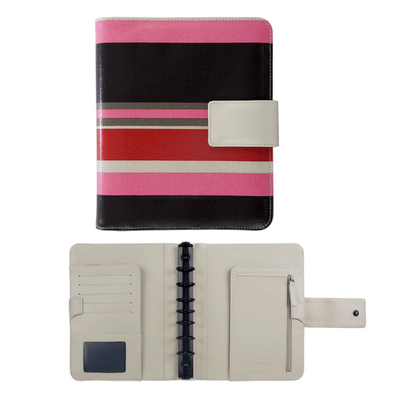 Just the display full of antiquated three-ring mini binders with all their Reagan-era stateliness was enough to make us iPod owners smug. And I hate smugness.
But it brought to light an interesting parallel applicable to those who create and manage media: Products become outmoded, because of their creators' resistance
1. to change and
2. to see the obvious progression of their field.
I mean, we can calendar all the things a dayplanner user can on our iPods, which are not even full-blown PDAs. Yet, this company still does business?
It reminds me of people I've worked with in the communication and journalism industries. They lament the waning interest in print (evident in declining newspaper circulation rates), but refuse to try and learn things like HTML code. Hello? Print online > HTML > Job security?
In my spare time, I've been getting comfy with the Adobe Creative Suite tools and making sure I'm almost as competent digitally as I am on paper. Almost no one at my alma mater nor in my profession has underscored the importance of this content conversion—and now my 17-year-old brother can code circles around our highest media executives.
Just sayin' ... we're not immune from the Covey factor either.
Print will go on
A number of media research firms have released information in our early 21st century that all draws the same conclusion: The advent of the Internet did not kill other forms of media. Rather, the distribution of attention(s) has shifted to include yet another medium.
THAT'S IT.
No post-apocalyptic, non-book world are we inhabiting. At least with Americans, we are living in a media democracy where print, broadcast, telecom, internet and gaming dynamics co-exist tolerantly (or semi-tolerantly) on the low end of the spectrum, and completely intertwine and enhance each other on the high end.
I am thrilled to see this data in concrete terms. It reinforces data I read earlier in college (early 2000s) that said print isn't going away, it's just going to become more specialized, more decorative and more exclusive.
 Deck of 50 "city walk" cards by Chronicle Books
In addition, a number of newspapers are finding
Now it remains to be seen whether these new business models for sustaining news will work, but it certainly beats the throw-in-the-towel scowls of all those naysayers who are predicting the end of paid writing as we know it.
After plowing through so many unrefined blogs and videos on the 'net, I can safely deduct that quality information, like a search engine, is still treasured for its ability to cut through content garbage quicker than you can type Google.com.
Rest easy, creators of quality information. You can put a premium on your product.
On the eve

A friend recently remarked to me that I had begun this blog "with grand and noble intentions and yet now you are finding it hard to keep up the energy for it."
I must admit this rings as true as the sound of New Year's Eve celebrants at midnight, and I'm glad he reminded me of this. It's something I've resolved to do awhile ago: be more consistent with my "core competencies" as a writer. (And for the record, no I do not believe in "resolutions." Rather, I believe in daily progress along the zen/Buddhist carry-water-up-the-hill line of things.)
If you've known a writer, dated one, had one in your family and/or hated one, you know that we thrive on inspiration, and can often be the source of it to others, usually once our thoughts solidify and materialize. But you probably also know that we love to begin our process, then struggle toward the final editorial finish line with all of the strength of Jell-o on two toothpicks. Believe me, writing is the metaphorical birthing process. That could explain why I still haven't had any actual children.
But truly, I did resolve a month or two ago to make my scribing-career strengths visible and consistent for all to observe, while keeping my less-realistic "stretch goals" to myself until they were more tenable. I think I began to worry (with reason) that in my relationships at home, at work and at play, others have remarked with a frequency uncomfortable to me about my wavering power, rather than my staying power.
I don't think this means I'll commit to a specific plan in terms of the frequency or duration of these missives, but I promise to ruminate well and deliver more regular feedback from my cranial control center.
Signing off ...
Subscribe to:
Posts (Atom)